

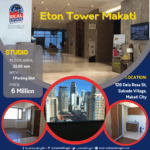
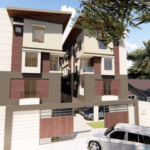

The market shift has given rise to a pragmatic new wave of buyers seeking affordable, ready-to-occupy properties built for long-term stability rather than quick gains.
Over the past decade, the Philippine real estate landscape has weathered a dramatic cycle of euphoric highs, sharp corrections, and structural recalibrations. Today, despite macroeconomic headwinds and a record-high unsold inventory, the market remains resilient and is heading towards a more sustainable trajectory.
According to Leechiu Property Consultants’ (LPC) First Half 2026 Philippine Market Report, the residential market continues to hold its ground despite geopolitical tensions, elevated interest rates, and accelerated inflation.
“The demand is intact despite inflation, higher borrowing costs, and global uncertainty,” noted Roy Golez, LPC Director for Research, Consultancy, and Valuation.
He cited that during the first half of 2026, residential take-up grew 6 percent year-on-year to approximately 40,500 units during the first half of 2026, demonstrating persistent demand among buyers.
Encouraged by this momentum, real estate developers increased new project launches by 18 percent over the same period, signaling sustained long-term confidence in the market’s trajectory.
While the current inventory sits at a record 82,900 units, Golez emphasized that this represents roughly 34 months of supply—a level market analysts view as healthy and manageable given current absorption rates.
During the report presentation, Golez also revealed that the strongest momentum of the real estate sector is now shifting to both Northern and Southern Luzon.
Drawing from this first half report, the change in rhythm of production, demand, and accessibility doesn’t only suggest a change in numbers alone but in terms of consumption.
Reshaping consumer behavior
Between 2010 and 2018, the Philippines experienced an unprecedented property boom. Driven by low interest rates, steady overseas remittances, and expanding commercial hubs, residential prices in Central Business Districts (CBDs) surged by 125%—or 77% when adjusted for inflation—according to Global Property Guide.
During those peak boom years, speculative “flipping” became a dominant strategy among real estate investors. The practice, as defined by ebsco.com, involves buying properties to resell quickly for short-term profit rather than holding them for long-term appreciation.
Investors typically relied on one of two methods: capitalizing on rapidly appreciating markets to resell with minimal added investment, or purchasing undervalued properties, renovating them, and selling at a premium.
However, that momentum hit friction in 2019. A cooling domestic economy combined with the escalating US-China trade war slowed growth dramatically, with house prices edging up by a meager 0.9%—a 1% contraction in real terms.
The onset of the COVID-19 pandemic in 2020 dealt an even heavier blow: inflation-adjusted residential prices plummeted by 14.55% in the third quarter alone, leaving the Philippines among the world’s worst-performing residential housing markets by year-end.
In the face of these economic headwinds, speculative flipping has largely lost its luster. Instead, the market shift has given rise to a pragmatic new wave of buyers seeking affordable, ready-to-occupy properties built for long-term stability rather than quick gains.
“Demand is still there, but people are being much more careful about where they put their money,” Golez noted. “Buyers are looking harder at value and affordability, while developers are taking a closer look at which projects to move forward with.”

Institutional support in bridging the gap
As buyer priorities shift from rapid speculation to long-term dwelling, the mechanisms through which Filipinos acquire real estate are evolving just as rapidly. Where high entry costs once posed a formidable barrier to middle-income end-users, expanded institutional frameworks and creative developer financing are reopening doors to property ownership.
Central to this transformation is the government’s Pambansang Pabahay para sa Pilipino (4PH) Program. According to the Philippine Information Agency, this program is designed by the Department of Human Settlements and Urban Development (DHSUD) to directly address the country’s massive housing backlog. 4PH relies on public-private development partnerships to make formal urban housing viable.
Through key financial channels like the Pag-IBIG Fund (Home Development Mutual Fund), the program provides substantial interest subsidies—effectively reducing annual borrowing costs to single-digit promotional rates (such as 3 percent per annum) for eligible low- to middle-income earners.
Supported by extended 30-year repayment windows and low equity requirements, the program allows working families to secure condo units without overwhelming their monthly household cash flow.
At the same time, private developers are meeting buyers halfway by rolling out aggressive, consumer-friendly payment structures to counter the impact of elevated interest rates.
To ease upfront financial pressure, major real estate firms are introducing stretched step-up down payments that allow buyers to start with minimal initial monthly amortization payments that gradually increase over time as their earnings grow.
Additionally, developers are offering zero-interest downpayment terms that spread equity requirements across 24 to 48 months, significantly reducing immediate liquidity strain.
Beyond flexible equity schedules, stronger collaborations directly with retail banks—such as BPI, BDO, and UnionBank—are allowing developers to bundle bank registration fees straight into long-term loans, minimizing the initial lump-sum cash required at turnover.
Together, this convergence of state-backed subsidies and flexible private-sector terms has effectively democratized condominium living. Condos are no longer viewed strictly as speculative luxury assets, but as accessible, resilient housing options for practical end-users.
The Philippine residential property market is no longer defined by speculative frenzies. While macroeconomic friction and high inventory levels present near-term hurdles, the underlying engine—powered by real end-users, government-supported homebuyer programs, and regional infrastructure development—points toward a more mature and durable horizon.
The article was originally published in Business Mirror and written by Vincent Peter Rivera.
If you like this article, share it on social media by clicking any of the icons below.
About Post Author


More Stories
PNB Holdings builds long-term value through sustainable real estate
Industrial developers shift away from speculative builds
DMCI Homes bets on leisure, MICE with San Juan resort