


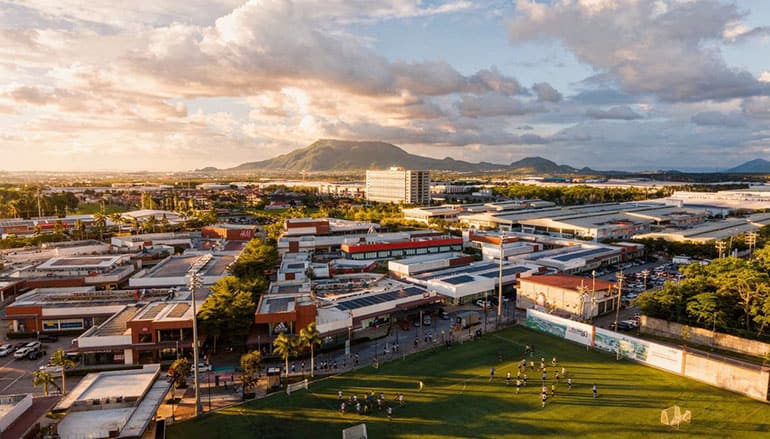
INDUSTRIAL property developers are increasingly moving away from speculative construction in favor of build-to-suit and pre-committed facilities as elevated financing and development costs encourage more disciplined capital deployment, according to property consultants.
“Build-to-suit and pre-committed facilities are increasingly displacing speculative construction, as occupiers in e-commerce, distribution, and cold chain prioritize purpose-built, specification-aligned space. As demand intensifies, a northern growth corridor is emerging to complement the established southern belt,” Cushman & Wakefield said in its second-quarter MarketBeat Industrial report released in August.
The shift allows developers to secure tenant commitments before construction, reducing exposure to leasing and financing risks while matching new supply with occupiers seeking facilities tailored to their operational requirements.
Joy Rosario-Bautista, head of industrial markets at real estate advisory firm PRIME Philippines, said industrial properties have remained resilient despite slower economic growth, higher inflation, elevated financing costs, and rising fuel prices.
“You’ve heard about the slower GDP, higher inflation, elevated financial costs, and rising fuel prices. Naturally, these are the factors that create operational costs to manufacturing, logistics, and e-commerce. But the industrial behaved differently. Warehouses, manufacturing facilities, and distribution centers are operational assets,” Ms. Rosario-Bautista said during PRIME Philippines’ second-quarter market briefing in late July.
She said developers are increasingly favoring lower-risk strategies such as pre-leased developments as companies seek facilities that improve operating efficiency.
“Companies want a preleased site that actually makes sense in the market because the market is now looking for efficiency. They wanted a more customized, more aligned to their operation because, at the end of the day, they want cost-efficient facilities that would support the operation,” Ms. Rosario-Bautista said.
Cushman & Wakefield said the Philippine industrial real estate market has a total inventory of 9,400 hectares (ha), with another 400 ha scheduled for development from 2026 to 2028.
About 860 ha of industrial estates are planned or under construction nationwide, according to the property consultancy.
Central Luzon accounts for the largest share of the development pipeline at 560 ha, followed by the Cavite-Laguna-Batangas (Calaba) region with 190 ha and Metro Davao with 110 ha.
Cushman & Wakefield said investment commitments also point to continued demand for industrial properties despite higher development costs.
The Philippine Economic Zone Authority approved P140.7 billion worth of investments in the first half, up 94.42% from a year earlier, according to the property consultancy.
“Approved pledges were led by manufacturing (45%), followed by logistics (15%) and ecozone developments (9%), reflecting strong investor confidence in the sector’s productive capacity and pointing to a robust pipeline of projects expected to drive employment growth through yearend,” Cushman & Wakefield said.
The consultancy said the investment pipeline, coupled with demand from manufacturing, logistics, e-commerce, and cold-chain operators, is supporting the expansion of pre-committed and build-to-suit facilities even as developers become more selective about speculative projects.
The article was originally published in Business World and written by Juliana Chloe A. Gonzales.
If you like this article, share it on social media by clicking any of the icons below.
About Post Author





More Stories
Camella Honors GenSan Heritage and Homegrown Spirit at Tuna Festival 2026
Gabriel Formoso named National Artist for Architecture
Makati: The city that is learning to walk again