

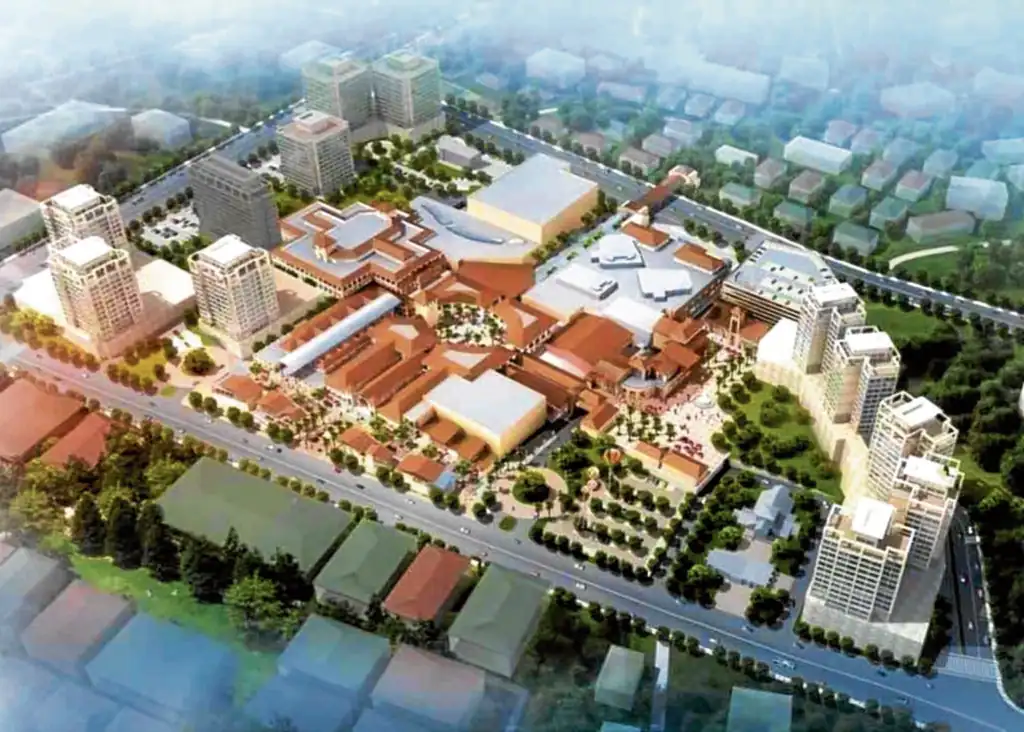
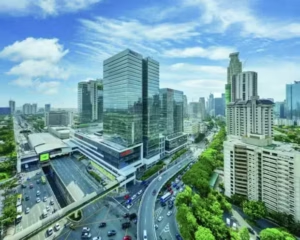
The southern area of Metro Manila has become an integrated growth corridor supported by major infrastructure, townships, institutions, commercial centers, and high-end villages.
Today, Metro South continues to stand out as one of the few large-scale horizontal residential markets accessible to major business centers, backed by limited land availability, strong end-user demand, and promising long-term property appreciation.
Infrastructure-driven accessibility
The continued expansion of the area, including nearby provinces in the Calabarzon Region, is fueled by infrastructure-driven accessibility.
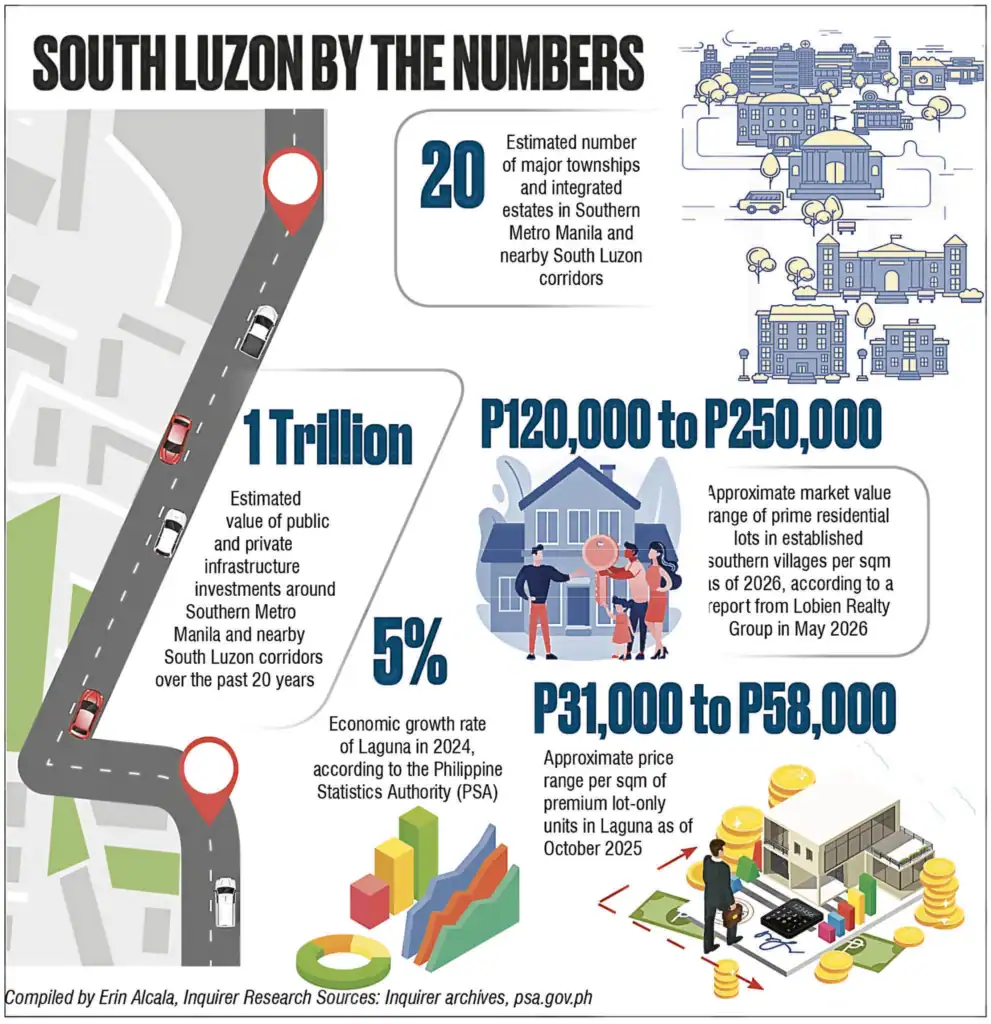
For the past two decades, Southern Metro Manila and South Luzon have benefited from public and private infrastructure investments, which have reportedly exceeded P1 trillion. These investments serve not only as mobility upgrades, but as long-term catalysts for land values.

While the South Luzon Expressway (SLEx) continues to serve as the primary transport artery of the South, accessibility now extends well beyond it through projects like the Cavite-Laguna Expressway (Calax), Skyway Stage 3, C5 South Link Expressway, Daang Hari improvements, and connector roads.
With easier access to these expressways, people can better enjoy the benefits of the southern countryside. Destinations like Tagaytay as well as the beaches of Batangas are far more accessible to southern residents than to most living in the metropolis.
Strong growth potential
Another reason for settling in the South include the competitive prices of property relative to the rest of Metro Manila and these areas’ strong potential for further growth.
The Cavite-Laguna-Batangas (Calaba) corridor, for instance, has emerged as one of the most competitive hubs in the country, attracting major industrial players and wide range of support industries. Investor confidence in the region is fueled by infrastructure connectivity.
Cavite is positioning itself as an international gateway and business hub with the Cavite Port Development, including Sangley Point International Airport, and the 116.2-ha Cavite Economic Productivity Zone.
Laguna’s proximity to the metropolis and connectivity to other South Luzon provinces meanwhile contributed to its strong economic and business growth. Its commercial hubs such as Laguna Techno Park, together with thriving sectors like business process outsourcing (BPO) and real estate, continue to attract professionals and investors looking for opportunities outside the big cities.
Data from the Philippine Statistics Authority published in November 2025 reported that Laguna’s gross domestic product (GDP) reached P1.08 trillion in 2024, retaining its distinction as the only province with a trillion-peso economy since 2023.
This economic performance is largely driven by the numerous industrial estates and economic zones under the Philippine Economic Zone Authority (Peza), which attract local and foreign investments, generating employment opportunities and boosting exports.
The Laguna Provincial Planning and Development said the province continues to be the preferred location for investors due to its favorable business environment. Besides its strategic location, it has skilled workers, developed infrastructure, as well as reliable energy and water resources.
Key industries such as manufacturing, wholesale and retail trade, as well as financial and insurance services also play a significant role in driving the local economy. To sustain this growth, the provincial government continues to strengthen partnerships that support the expansion of the industrial sector.
The article was originally published in Inquirer.NET and written by Karen Mae Amarilla.
If you like this article, share it on social media by clicking any of the icons below.
About Post Author




More Stories
Camella Honors GenSan Heritage and Homegrown Spirit at Tuna Festival 2026
Gabriel Formoso named National Artist for Architecture
Makati: The city that is learning to walk again