

With the Philippines facing an estimated housing need of 3.7 million units through 2028, industry leaders are placing renewed emphasis on collaboration as a key driver in expanding housing access and improving policy implementation.
The Subdivision and Housing Developers Association (SHDA) marked its 56th anniversary on May 20, 2026, gathering developers, government agencies, industry stakeholders, and partners at Marquis Events Place in Bonifacio Global City, Taguig. Anchored on the theme “Synergy—Onward Together!”, the event highlighted the association’s continuing push for closer coordination across the housing sector to help accelerate housing delivery and strengthen policy alignment.
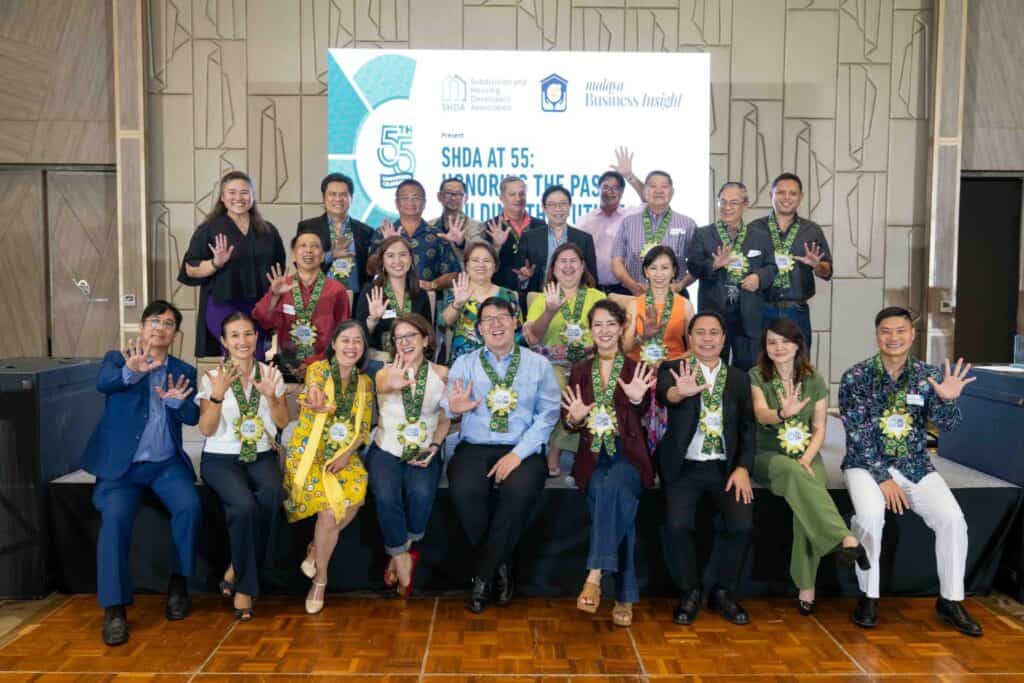
The milestone comes at a time when housing affordability, sustainability, and accessibility remain among the country’s pressing development concerns. For SHDA, addressing these challenges requires sustained engagement among both public and private sector stakeholders.
“At 56, SHDA stands at the convergence of legacy and urgency,” said SHDA Chairman of the Board Engr. Francis Richmond Z. Villegas. “The work of making housing affordable, sustainable, and accessible to every Filipino is far from finished, and it is work that none of us can do alone. As we face challenging times in both the global and local landscape, we are reminded not to lose sight of our goals and to continue moving Onward Together.”
Over the years, the organization has strengthened its role in housing policy discussions, actively participating in technical working groups led by the Department of Human Settlements and Urban Development (DHSUD). These engagements have included discussions on the Expanded Pambansang Pabahay Para sa Pilipino (4PH) Program, the streamlining of permits and licenses, and the review of socialized housing price ceilings.
SHDA has likewise contributed industry recommendations to the Anti-Red Tape Authority (ARTA) in support of the Joint Memorandum Circular aimed at simplifying permit and licensing processes for housing developments. Beyond these initiatives, the association continues to participate in housing boards, inter-agency committees, and congressional hearings in both the House of Representatives and the Senate, reinforcing its involvement in policy formulation and oversight.
“The progress we have seen in the past year on price ceilings and regulatory streamlining is a testament to what genuine dialogue can accomplish,” said SHDA National President Mr. Kerwin Padua. “These outcomes did not happen overnight. They are the result of sustained engagement, Technical working group meetings, regional consultations, committee hearings, and frank conversations with our government partners.”
At the local level, SHDA’s eight regional chapters have facilitated discussions between developers and government agencies such as DHSUD, the Land Registration Authority (LRA), and Pag-IBIG Fund. These engagements help address location-specific concerns related to project development, financing, and regulatory processes.
Established in 1970, SHDA has grown into a 350-member organization and remains one of the country’s leading industry groups involved in housing policy advocacy. Among its notable initiatives was its support for the institutionalization of DHSUD through Republic Act No. 11201, reflecting its long-standing commitment to structural reforms within the housing sector.
The association also works with academic and research institutions, including the Center for Research and Communication of the University of Asia and the Pacific, on the Collaborative Housing Roadmap (2025–2040). It also organizes the National Developers Convention, now in its 34th year, making it one of the longest-running annual gatherings of housing developers and stakeholders in the country.
As part of its anniversary celebration, SHDA will recognize partner institutions that have contributed to its advocacy and collaborative efforts over the years. The association also reaffirmed its commitment to promoting open dialogue, regulatory alignment, and inclusive participation as the industry works toward addressing housing affordability, sustainability, and financing concerns.
The article was originally published in PhilStar Property.
If you like this article, share it on social media by clicking any of the icons below.
About Post Author





More Stories
Camella Honors GenSan Heritage and Homegrown Spirit at Tuna Festival 2026
Gabriel Formoso named National Artist for Architecture
Makati: The city that is learning to walk again