


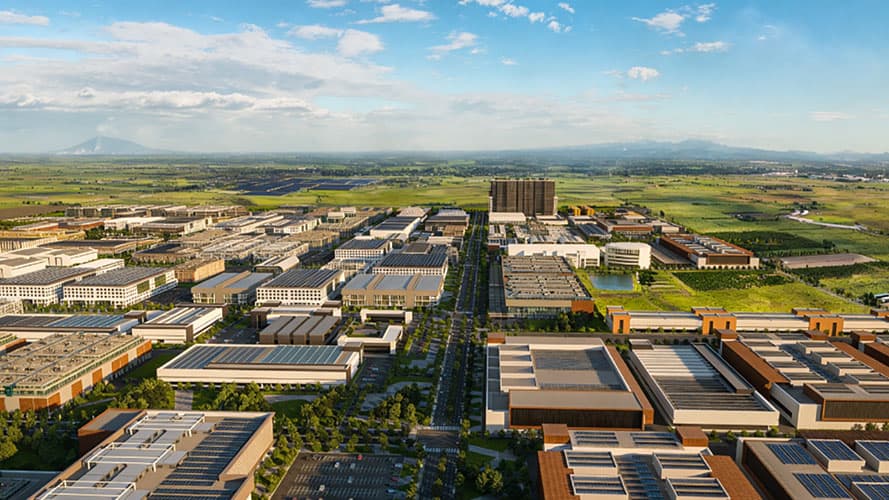
INDUSTRIAL demand remained robust in the first half (H1) of 2026, led by semiconductor, food and beverage, and fast-moving consumer goods (FMCG) manufacturers seeking facilities with modern specifications and strategic access to ports and expressways amid rising fuel costs. Central Luzon will be a major contributor to new industrial space beyond 2026, and this should be a plus for property firms with massive and growing industrial footprints in the region.
Central Luzon’s industrial profile is also starting to thrive, with higher-value industrial players locating and expanding within the region’s massive and sophisticated industrial parks. Over the past few years, major players such as Ajinomoto Philippines Corp. and Coca-Cola Beverages Philippines, Inc. have occupied industrial space in the region. Other new, high-profile entrants include electric vehicle and fiber cement manufacturers.
Supply expanded with 230 hectares (ha) of new industrial developments in Southern and Central Luzon, including TARI Estate in Tarlac, while another 190 ha are expected by yearend, mostly in Cavite.
Rental rates softened for traditional warehouses across Cavite, Laguna, Batangas (Calaba), Central Luzon, and Metro Manila, but modern warehouse rents continued to rise. Meanwhile, industrial vacancy improved, declining to 13.1% from 14.1% at end-2025 due to stronger absorption.
RISING DEMAND FOR MODERN WAREHOUSES
In H1 2026, Colliers recorded a 3% correction in average rents for traditional warehouses across Southern Luzon, Central Luzon, and Metro Manila half on half (HoH). Meanwhile, average lease rates for modern warehouses in these locations grew by 8% HoH during the period. Colliers believes this is an opportune time for landlords and developers to retrofit and renovate existing facilities, given the heightened demand for modern warehouses.
Among the features of these warehouses are a floor-to-ceiling height of between 12 and 14 meters (m), up to 5 tons of floor load capacity, a fire sprinkler system, and light illumination. Some warehouse operators are further automating their facilities with the integration of advanced robotics and conveyor systems. In our view, further adopting technological innovations is crucial for landlords and warehouse operators to enhance their services and secure strong pre-leasing for state-of-the-art facilities.
HIGHLIGHT FACILITIES NEAR MAJOR INFRASTRUCTURE
Data from the Philippine Statistics Authority (PSA) reveal that logistics cost inflation in the country reached 16.8% in the second quarter (Q2) of 2026, a 21-year high. Transport inefficiencies, port congestion, and supply chain disruptions have significantly increased operating costs.
Colliers recommends that developers and warehouse operators highlight their facilities’ proximity to major infrastructure. We expect more companies, particularly e-commerce and export-oriented firms, to locate within micro-warehouses, distribution centers, and factories within major industrial corridors with direct access to highways, toll roads, and ports. While warehouses in Calaba and Central Luzon remain top-of-mind locations, facilities in Metro Manila are also well-positioned for micro-warehousing and last-mile fulfillment operations, making them ideal for firms seeking to minimize urban delivery costs.
MAXIMIZE MANUFACTURING PUSH
The Philippines remains an attractive manufacturing destination for international manufacturers seeking to expand and diversify their supply chains in Southeast Asia.
The Philippine government has been actively attracting investments from traditional and nontraditional trade partners such as Taiwan, Japan, Singapore, Thailand, Sweden, and Brazil.
Colliers Philippines believes that developers can maximize opportunities by actively participating in overseas trade fairs and investment missions mounted by investment promotion agencies (IPAs) such as the Philippine Economic Zone Authority (PEZA) and Board of Investments (BoI). Developers can take advantage of these events to promote the Philippines as a manufacturing hub and highlight the benefits of locating within the country’s industrial parks.
GAME CHANGER OR A MAJOR BUMMER?
The Central Luzon industrial sector is also likely to benefit from the Pax Silica initiative. Colliers sees the 4,000-acre semiconductor and advanced hardware manufacturing hub complementing the Luzon Economic Corridor, boosting industrial activities across Clark, Subic, Batangas, and Manila. In our opinion, the property market, in general, will benefit from this initiative. As business activity accelerates, the project is likely to have a positive spillover effect on residential, office, and hospitality segments.
However, Colliers flags several risks that the government needs to address to ensure the initiative’s long-term sustainability. The Bases Conversion and Development Authority (BCDA) recently clarified that Pax Silica will not host hyperscale data centers and will focus on semiconductor manufacturing activities. While this reduces concerns over the massive power and water requirements associated with data centers, the project still faces risks such as environmental concerns, critical mineral sourcing, and geopolitical conflicts arising from potential trade tensions, particularly given the semiconductor industry’s heavy reliance on complex global supply chains. In our view, a massive information campaign should be implemented by the government to address Filipinos’ concerns.
The article was originally published in Business World and written by Joey Roi Bondoc.
If you like this article, share it on social media by clicking any of the icons below.
About Post Author



More Stories
Shang Properties steps outside Manila, makes distinct mark in Cebu
Airbnb lists top PH getaways during the ‘ber months’
Where movement drives growth