



Amidst the geopolitical uncertainties stemming from the ongoing conflicts in the Middle East, the current administration continues its tireless efforts to reintegrate Overseas Filipino Workers (OFWs) caught in the crossfire.
In this complex landscape of migration and return, the role of the Pag-IBIG Fund, a crucial pillar and key shelter agency, warrants a closer look.
In previous articles, I have shown how the Pag-IBIG Fund helps OFWs turn years of sacrifice into tangible savings and security. However, public institutions are truly put to the test not during the ease of planning but during periods of disruption. This is precisely where we find ourselves. In this challenging time, the Fund has demonstrated a vital facet of its mission: responsive compassion.
For many returning OFWs, the true test begins the moment they land. Families must reorganize finances, weigh the choice between local employment and waiting for a safer window to go abroad, all while managing household obligations under a cloud of uncertainty.
Tailored relief packages
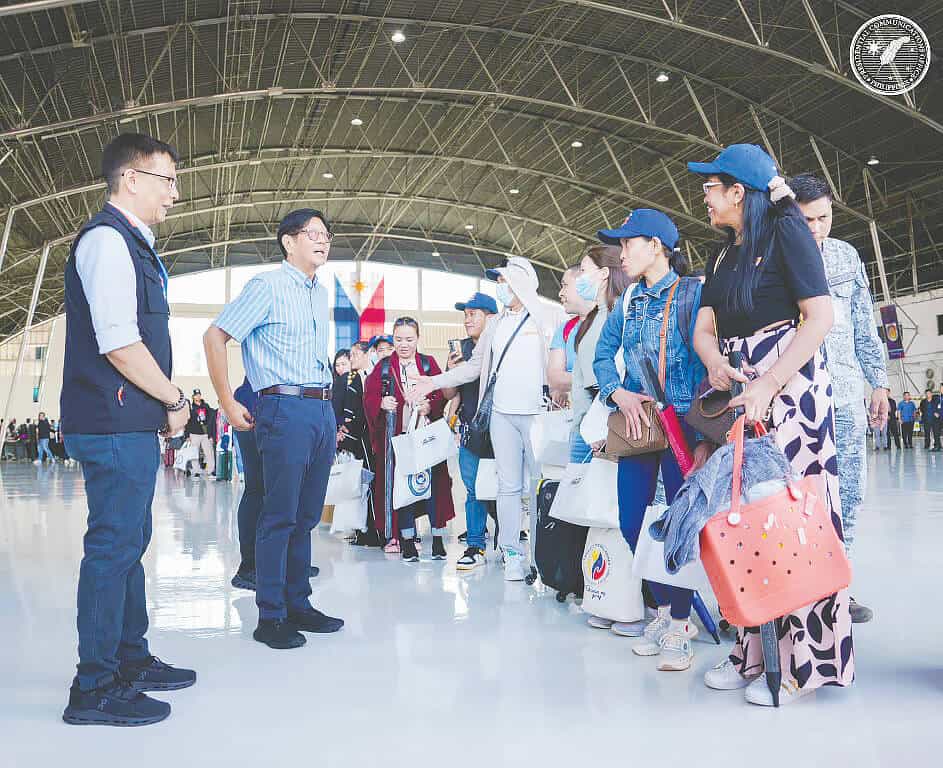
In response to President Ferdinand R. Marcos Jr.’s directive to provide meaningful assistance to those affected by the Middle East crisis, DHSUD Secretary and Pag-IBIG Fund Board Chair Jose Ramon P. Aliling, alongside the Board of Trustees, promptly approved a series of relief packages:
1. Withdrawal of Regular Savings: Qualified OFW members may withdraw up to 100% of their Regular Savings, including their contributions, the employer counterpart, and earned dividends, even before the 20-year maturity.
2. MP2 Savings Access: Members may likewise withdraw 100% of their MP2 Savings and returns, bypassing the usual five-year lock-in period.
3. Housing Loan Moratorium: Borrowers may avail themselves of a three-month moratorium on housing loan payments, free from interest and penalties, with the loan term simply extended by three months.
Pag-IBIG Fund CEO Marilene C. Acosta has ensured that these benefits are reachable through Virtual Pag-IBIG, physical branches, and OFW desks. Benefits that exist only on paper are merely a headline; benefits that are clear, prompt, and accessible are genuine help.
Addressing contingencies
For a worker returning without a paycheck, early access to savings provides the liquidity needed for food, tuition, or medicine. These are not merely symbolic gestures; they are practical financial lifelines.
For those with MP2 investments, it offers a buffer while they decide whether to return abroad or establish a small livelihood here at home. For housing borrowers, a three-month pause in amortization can be the thin line between financial panic and stability.
More importantly, this package fits squarely into the broader reintegration framework led by the Department of Migrant Workers (DMW) and the Overseas Workers Welfare Administration (OWWA). Reintegration is not just about a plane ticket home; it is about helping a worker start again with dignity and a degree of financial footing.
Scale and responsibility
The magnitude of this obligation is reflected in the data. As of February 2026, there are 891,427 registered OFW members in the Middle East. Of this number, over 86,234 are MP2 savers and 40,024 are housing loan borrowers, concentrated largely in Saudi Arabia, Qatar, the UAE, and Kuwait.
These figures represent a massive community that has consistently placed its trust in the Fund. If ever there was a moment for the institution to reciprocate that trust, this is it.
A fulfilling mandate
Sec. Aliling’s policy guidance remains crystal clear: support must be humane, lawful, and swift enough to matter. By utilizing the tools already within its mandate, like savings access and temporary loan relief, the Pag-IBIG Fund has directed help exactly where it is most needed.
In these trying times, providing our overseas workers and their families with the space to reflect, recover, and begin anew is not a small feat. It is part of the government fulfilling its duty, the Fund serving its purpose, and the nation honoring the sacrifices of those who have given so much for their families and our economy.
The article was originally published in PhilStatr Property and written by Henry L. Yap.
If you like this article, share it on social media by clicking any of the icons below.
About Post Author




More Stories
Homebuilders group raises concerns over escrow rules
Common Ground targets startups in new ‘digital park’ coworking space
How Pasig’s Ortigas area is rethinking the spaces between destinations