


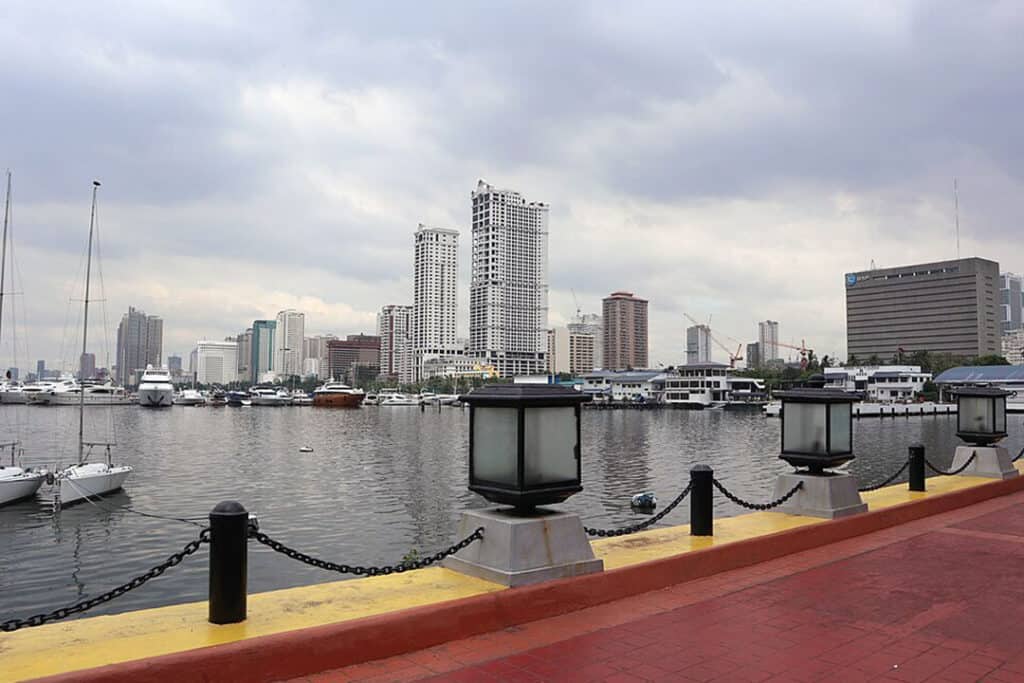
THE Philippine office market’s momentum stalled in the second quarter (Q2) of 2026 as geopolitical uncertainty from the Middle East crisis prompted occupiers to reassess timing, costs, and space commitments. Leasing decisions were pushed to the latter part of the year, with occupiers prioritizing renewals over relocations or expansions amid higher capital expenditure assumptions. Still, the market has recovery levers in place. Flexible workspaces and managed solutions are gaining traction, while Administrative Order (AO) No. 45 is expected to widen the pool of Philippine Economic Zone Authority (PEZA)-accredited options in Metro Manila and support information technology and business process management (IT-BPM) and global capability center (GCC) requirements.
MIDDLE EAST CRISIS DAMPENS OFFICE DEMAND
As of the first half (H1) of 2026, Metro Manila recorded 336,000 square meters (sq.m.) of office transactions, with the second quarter accounting for 145,000 sq.m. This represented a 24% quarter-on-quarter decline, making the second quarter one of the softer periods since 2024. It is important to note that the slowdown reflects deferred leasing decisions rather than a broad-based contraction, as space surrenders remained at normal levels and were still largely tied to natural lease expiries rather than major downsizing or lease cancellations.
Primary central business districts (CBDs) continued to anchor demand. Makati CBD led Metro Manila with about 65,000 sq.m. of H1 2026 transactions, followed by Fort Bonifacio at 63,000 sq.m. Mandaluyong posted the sharpest improvement at 47,000 sq.m., supported by a major pre-leasing transaction in an upcoming office development. Traditional occupiers remained the largest source of demand, followed by third-party outsourcing firms and GCCs.
Outside Metro Manila, provincial office demand weakened substantially. H1 2026 provincial transactions reached only 65,000 sq.m., down from 159,000 sq.m. a year earlier, marking the weakest first-half performance since 2022. Iloilo remained ahead with 22,000 sq.m. of transactions, followed by Cebu at 19,000 sq.m., with the latter still constrained by limited available inventory in Cebu IT Park and Cebu Business Park.
REVISED VACANCY AND NET TAKE-UP FORECASTS
Metro Manila vacancy stood at 19% as of H1 2026, broadly stable from recent quarters and an improvement from 20% a year earlier. Given softer demand, Colliers revised its full-year 2026 net take-up forecast to 300,000 sq.m. and its year-end vacancy forecast to 19.3%. No new completions were recorded in H1 2026, but about 434,000 sq.m. of new supply is expected in H2, keeping pressure on landlords to differentiate through pricing, amenities, and building accreditations.
FLEX-ING FORWARD
Flexible workspace has become one of the market’s clearest bright spots. Net take-up doubled year on year to about 6,000 seats in H1 2026, while Metro Manila’s flex stock reached around 60,000 seats. Flexible workspace providers also accounted for a meaningful share of traditional occupier demand, reflecting demand for this type of office model.
In our view, the appeal is straightforward: flex and managed solutions convert long-term, capital-heavy commitments into shorter and more scalable obligations. For occupiers still uncertain about headcount growth, hybrid work policies, or expansion timing, this model offers greater agility and reduces fit-out risk. For landlords, partnering with flex operators can help activate vacant floors faster, create a pipeline of future conventional tenants, and improve competitiveness in buildings where straight-lease demand has slowed.
AO NO. 45 TO SUPPORT DEMAND
Administrative Order No. 45 comes at an important time for the office sector. By exempting information technology (IT) parks and IT centers in Metro Manila from the moratorium under AO No. 18, the policy is set to reopen a wider set of PEZA-compliant locations for IT-BPM firms and GCCs. As of H1 2026, Metro Manila had about 7.9 million sq.m. of PEZA-accredited office stock, with around 1.46 million sq.m. available for lease. Colliers also estimates that roughly 681,000 sq.m. of available space currently under PEZA processing or application may be added to the compliant inventory if approved.
This should benefit occupiers that had deferred leasing decisions due to limited PEZA options in preferred submarkets. However, the impact will vary by location. Fort Bonifacio, Makati CBD, and the C5 Corridor still have relatively narrow windows for site selection, while submarkets such as the Bay Area, Makati Fringe, Quezon City, and Ortigas CBD offer deeper pools of current and potential PEZA supply. Occupiers should therefore move early, broaden their shortlists, and engage landlords whose accreditation is still being processed.
CONCLUSION
While the Middle East crisis continues to weigh on leasing sentiment, occupiers should avoid a passive wait-and-see approach. Lease reviews should begin 18 to 24 months ahead of expiry to preserve leverage, secure favorable terms, and identify spaces aligned with long-term business needs. PEZA-registered occupiers should monitor both accredited and under-process buildings, especially in constrained locations where compliant supply can be absorbed quickly. Flexible workspace and managed solutions should also be considered where utilization, headcount, or cost remains uncertain.
Site selection should also place greater weight on transit-oriented developments. With commute time increasingly linked to talent retention and return-to-office participation, locations near existing and upcoming transport hubs are likely to remain more resilient. Landlords, meanwhile, should prepare for a more selective occupier market by elevating amenities, pursuing green certification, and repositioning older PEZA assets through refurbishment, repricing, or clearer sustainability strategies. The market may be moving through a slower cycle, but occupiers and landlords that act early will be best positioned when demand returns.
The article was originally published in Business World and written by Kevin Jara and Kath Taburada.
If you like this article, share it on social media by clicking any of the icons below.
About Post Author



More Stories
Camella Honors GenSan Heritage and Homegrown Spirit at Tuna Festival 2026
Gabriel Formoso named National Artist for Architecture
Makati: The city that is learning to walk again