

CLIMATE change — through stronger storms, rising sea levels, and extreme temperatures — is exerting growing pressure on the safety and durability of roads. Amidst these challenges, the construction industry is seeking solutions to make infrastructure more resilient, driving the development of new technologies and materials designed to withstand, adapt to, and recover from climate-related impacts.
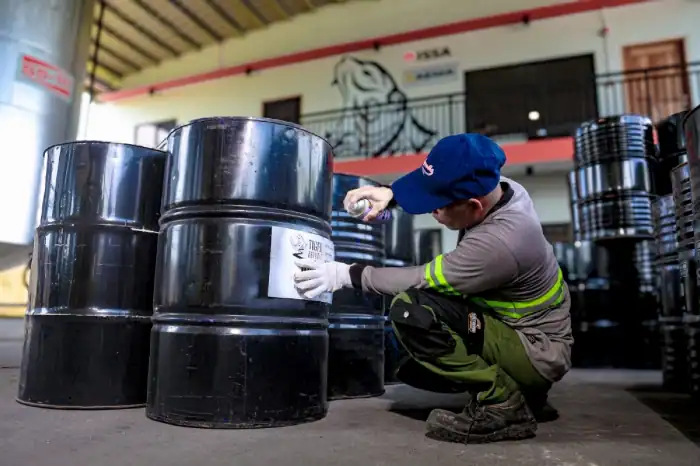
As one solution, Tiger Asphalt Sales Corp. (TASC) is offering antrocel cellulose fiber to the local road construction industry. The company, a provider of asphalt and road construction materials, launched this product on Aug. 19.
“Our roads face very demanding conditions such as heavy traffic and overloaded vehicles. Heat and rain can cause roads to deteriorate faster,” said TASC President Nyla Festejo.
Cellulose fiber is a strong, absorbent and biodegradable material used in many industries. In construction, it is added to concrete and asphalt to produce stronger and more durable roads, pavements, and structures.
TASC Vice President Nicole Festejo added, “Cellulose fiber technology allows us to develop stronger, more durable asphalt mixtures that can better address these stresses. Ultimately, that means roads that last longer, require less frequent repairs, and provide a better driving experience for Filipinos.”
Considered a “green” additive, cellulose fiber technology is “essentially a tiny, plant-based fiber additive that helps strengthen and stabilize asphalt,” the Festejos explained (which?). “When mixed into asphalt, the fibers act like a reinforcing network—helping hold the mixture together, improve durability, and reduce problems such as cracking, rutting, and asphalt bleeding.”
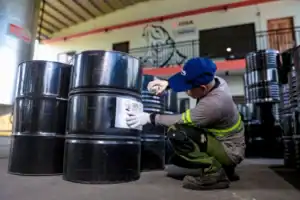
The company partnered with Antrocel, the Lithuanian company that produces the cellulose fiber pellets, to make the product available in the country. Antrocel cellulose fiber is designed for high-performance asphalt pavements, stone mastic asphalt (SMA), and other demanding road projects.
Antrocel CEO Simas Ambroževičius said that Antrocel products are used all over the world in places like the United Kingdom, Europe, Brazil, Argentina, Ecuador, Israel and India. “Our pellets have been tested under extreme conditions,” he said, citing India, “where climate is very, very tough.”
Climate change
According to the Festejos, TASC, which offers a range of asphalt and road construction materials, is not just a supplier and distribution company but an emulsion producer as well.
The company built its own Asphalt Emulsion Blending Facility in Baras, Rizal, to diversify and expand its business. The plant is equipped with a mill, an in-house laboratory, and a research and development team.
The plant, according to Nyla, means “new products and technologies” for the customers and the market. “Hindi lang s’ya isang facility where we produce asphalt emulsion. It represents an investment in our ability to build products and capabilities that are responsive to actual conditions of the Philippine market.”
The Festejos concurred that climate change is among the biggest challenges facing Philippine roads today.
“With heavier and more prolonged rainfall, like what we’ve experienced with the ongoing habagat, roads are exposed to more water for longer periods. Water and asphalt are essentially enemies — once water gets into the pavement, it can accelerate deterioration and weaken the road structure,” they explained.
They emphasized that the changing climate requires the road construction industry to rethink how roads are designed and built. “This is why we need to look at new and better road designs and technologies that can withstand the conditions our roads face today,” they said.
TASC has joined international industry organizations such as Asphalt Emulsion Manufacturers Association (AEMA) and International Slurry Surfacing Association (ISSA) to help the company keep abreast of new technologies in road construction.
“Being a member gives us access to international expertise, research, best practices, and a network of industry professionals. This helps us bring proven, up-to-date technologies to the Philippines,” the Festejos (name one sister) said.
But beyond international expertise and new technology, the sisters said that “it all starts with having a genuine heart for the Philippines — understanding our unique roads and developing solutions specifically suited to them.”
We need to move beyond simply building roads and focus on building roads that truly last, they said.
The article was originally published in The Manila Times and written by Michele T. Logarta.
If you like this article, share it on social media by clicking any of the icons below.
About Post Author


More Stories
DMCI eyes bigger nickel output from Palawan
PNB Holdings builds long-term value through sustainable real estate
Industrial developers shift away from speculative builds