


Meanwhile, looking solely at the market data for Metro Manila condominiums, where developers have been most active in recent decades, tells us the other side of the story. In 2025, upper-middle and upscale projects account for more than two-thirds of unsold residential condominium inventory in Metro Manila, while demand in the middle-income segment has been declining since 2023. Absorption of the current Metro Manila condominium inventory is estimated at a little over four years. And yet, the country’s housing backlog consists primarily of socialized housing needs.
There is a clear mismatch: too much supply where demand is low, too little where demand is highest. But we know that the fix isn’t simply more units—it’s more of the right units, reasonably financed and delivered where households actually want to live.
And that last point touches on an inconvenient truth: even as development expands beyond Metro Manila, people will keep coming back because this is where the population gravitates toward. The jobs are here. The employers are here. The higher wages, the industries, the networks remain anchored in the capital region.
Housing alone won’t reshape migration patterns. Relocating families without sustainable employment nearby only pushes them into longer commutes or drives them to move back. Metro Manila remains the country’s economic center of gravity, and any housing strategy has to account for that reality.
Which is why the next phase of reform needs an urban‑affordable strategy that matches the ambition of 4PH’s national rollout. We need far more low‑cost units built within Metro Manila itself—not just on the periphery, and not exclusively as high‑rises priced beyond the reach of the families they’re meant to serve.
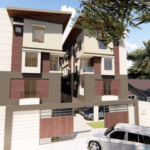
One practical solution is modular or container‑type micro‑housing, adapted into compact, self‑contained homes. These units are fast to build, low‑maintenance, and fit naturally into the kinds of spaces Metro Manila actually has available: small irregular lots, brownfield sites, transport‑adjacent parcels, and unused pockets within larger estates. Crucially, they can be offered under a rental model—giving workers a way to live near their jobs without taking on long‑term amortization they can’t yet afford. Another option is low-rise walk-up developments, which eliminate elevator costs from construction and keep potential selling prices of each unit on the lower end of the range.
Other cities around the world already use modular units as livable starter homes for workers. In Metro Manila, the same approach could offer a scalable way to house people near their source of income instead of miles away from it. The principle is simple: housing supply should follow the jobs.
Narrowing the housing gap requires not just more units, but smarter coordination, modern construction methods, and sustained investment where demand is high. If the reforms underway in early 2026 continue gaining traction, the country may finally be moving from merely acknowledging the housing crisis to actually resolving it. The building blocks are falling into place. Quicker approvals, realistic financing and pricing, diversified delivery models—including rental housing under 4PH, which DHSUD has begun exploring in partnership with LGUs. Rental housing may seem like a temporary fix, but giving more families access to decent housing within the city, even through a short-term arrangement, is a meaningful step toward improving their quality of life.
DHSUD’s 8-Point Agenda reinforces this direction by focusing on:
• Expanding delivery modalities and streamline processes
• Making cooperation between and across agencies more efficient and effective
• Strengthening coordination and communication between stakeholders
• Minimizing corruption
These measures can meaningfully address the needs of families who need homes but cannot realistically afford them without assistance—if applied effectively.
But the inconvenient truth remains: housing succeeds only when it aligns with where people actually want to work and live. There will always be growth outside Metro Manila, but the capital region will remain the focal point—the place where Filipinos return to for opportunity. That means building more affordable homes inside the city, including through rental models, not hours away from its job centers. By evolving past older strategies and aligning reforms with the needs of Filipino families, DHSUD is charting a more realistic and sustainable path to addressing the housing crisis.
The article was originally published in Manila Standard and written by Roy Amado Golez Jr..
If you like this article, share it on social media by clicking any of the icons below.
About Post Author




More Stories
Camella Honors GenSan Heritage and Homegrown Spirit at Tuna Festival 2026
Gabriel Formoso named National Artist for Architecture
Makati: The city that is learning to walk again